


Spanish football added a new vertex of shame in Cornellà, one that projects a damaging image abroad. A significant number of fans booed the Egyptian national anthem, while another, radically foolish group used the match to unleash their far-right vitriol with Islamophobic slogans and chants—an act of stupidity with grave consequences. In such cases, it is often said that only a few distort reality, but it is no less true that Spain insists on presenting a pitiful picture of its relationship with football to the world.
Beyond the sociopolitical analysis that such a graphic display of intolerance deserves, one thing is certain: Spanish football, enviable in many respects, has stubbornly exported the worst symptoms of misogyny, racism, and Islamophobia.
The events in Cornellà are part of a recent triangle of shame. At the 2023 Women’s World Cup, Luis Rubiales, then president of the Spanish Football Federation, turned one of the happiest and most significant moments in Spanish sports history into a delirious display of sexism and obscenity. That infamous “cojones” and patriotic rant by Rubiales, initially celebrated by a considerable segment of the media and public opinion, escalated into an international scandal rarely seen in football—a sport where it seems everything has been witnessed, yet new depths of disappointment are always found.
In his role as a macho caudillo, Rubiales failed to grasp the damage he inflicted on Spain’s reputation beyond football, nor the immediate need to remove him from his position—a need aggravated by his deranged final speech before the federation assembly. That morass left a hideous image of leadership in Spanish football, starkly contrasted with the vitality and grit of the female players who had fought for their rights while becoming world champions.
Three months before the Rubiales case erupted, Vinícius was the victim of the usual racist insults heard in Spanish football, this time at the Mestalla stadium. However, the Real Madrid player’s reaction was unusual. He confronted his abusers with justified vehemence. The match was stopped for several minutes, leading to a shameful portrayal of La Liga and Spanish stadiums. It was one of those moments that define a before and after in a sorry event.
To the flow of misogyny and racism, Islamophobia has now been added—the vertex of an infamous triangle that could turn into a quadrilateral or pentagon, given Spanish football’s extraordinary capacity to inflict the worst wounds upon itself.
In Cornellà, a great opportunity was lost to show that previous lessons had been learned. An unworthy and sustained offense was directed at the Muslim religion and its practitioners, at the Egyptian national team and its players, and at Lamine Yamal, a Spanish star who is also Muslim. All this was as clear as the chance that was offered to reject the violent message spreading from the stands—specifically from neo-Nazi sectors and other cheap patriots.
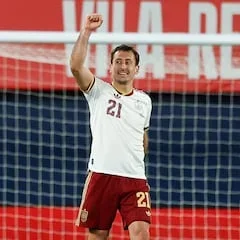
Spain continues on the right track. It was the moment for the team (players, coach, president of the Spanish Football Federation) to intervene in some way. Beyond far more important matters—such as the right to practice a religion or to believe in none, each person’s choice—the highly respected image of the Spanish national team worldwide was also being undermined. Fortunately, Luis de la Fuente spoke after the match with sincere bitterness and openly took on the idiots and their followers in Cornellà. The chance to defeat the disruptors had been missed, a breed that unfortunately has a habit of…
