

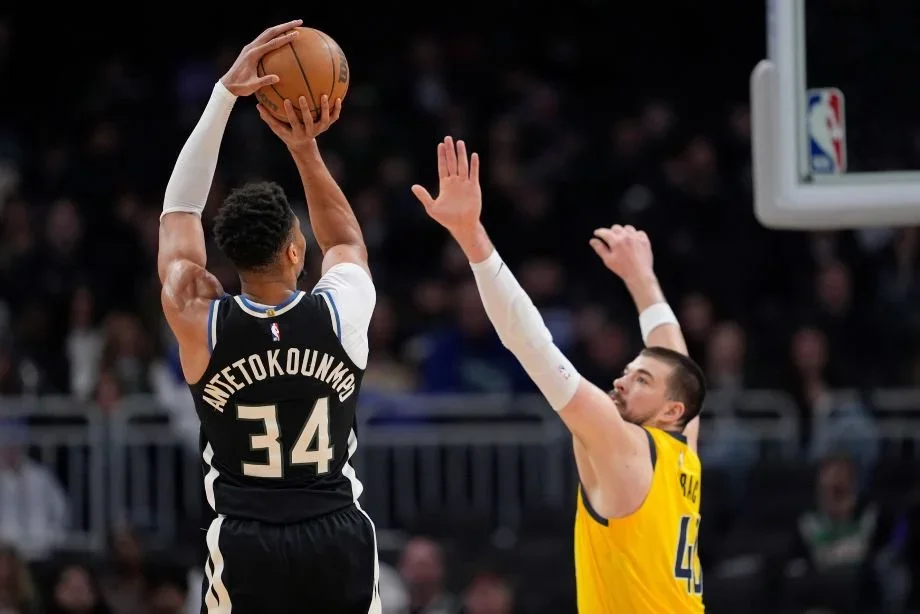
It’s been said the Indiana Pacers simply had bad luck in the draft lottery. The team fell out of the top four, triggering a clause from their winter trade for center Ivica Zubac that sent their fifth overall pick to the Los Angeles Clippers. After the lottery results, Pacers president Kevin Pritchard stepped before the media and took full responsibility for the gamble.
Kevin Pritchard, President of the Indiana Pacers:
“I feel for our fans. I take the blame for this risk. I’m surprised we ended up with the fifth pick this year—I thought it was time for some good fortune to come our way. But please remember: this team deserves a starting center to compete with the best next season. We’ve always been resilient.”
Naturally, a debate has emerged: Did the Pacers make a major miscalculation, or is the reaction to the lottery outcome overblown? The trade itself seemed bold but not reckless—Indiana had cleverly protected the pick within the top four, anticipating that the 2026 draft class would feature two distinct tiers. Analysts widely agreed that the top four prospects—A.J. Dybantsa, Darryn Peterson, Cameron Boozer, and Kaleb Wilson—were potential future stars, and the Pacers were determined not to lose a shot at one of them.
Starting with the fifth pick, the talent pool changes. Players like Darius Eikhoff, Mikel Brown Jr., Keaton Wagler, Kingston Fleming, and Brayden Burris still offer promise, but the evaluations are far more cautious. Another factor: most of those prospects are guards, and Indiana already has plenty of depth at the position with Tyrese Haliburton, Andrew Nembhard, and T.J. McConnell. Coach Rick Carlisle isn’t known for thrusting young guards into heavy roles immediately. The case of Bennedict Mathurin—a top-six pick in 2022 who never secured a starting spot—proves that point. So even if the Pacers had kept the fifth pick, it likely wouldn’t have addressed their most pressing issue.
Indiana’s primary weakness was in the frontcourt. After Miles Turner departed for Milwaukee, the Pacers lacked a starting-caliber center capable of competing against title contenders. This gap became especially glaring as the NBA once again rewards size, strength, and interior play. The free-agent market offered few viable options: Anthony Davis and Kristaps Porzingis came with injury concerns, Jaren Jackson Jr. would demand a max contract, and the rest of the available big men weren’t clear upgrades over Turner. Simply put, there was no easy fix.
That’s why Zubac appears to be an almost perfect fit for Indiana. He’s strong on the boards, solid defensively, runs pick-and-rolls effectively, and carries a contract far below superstar levels. For a franchise juggling the large salaries of Haliburton and Pascal Siakam, that’s critical. The Clippers weren’t going to part with him for nothing—Zubac is still in his prime, reliable, and in high demand at his position. A protected draft pick became the bargaining chip that sealed the deal.
Once the pick’s exact slot becomes known, the trade suddenly looks more painful—the concrete “5th pick” stirs emotions far more than an abstract future selection. But from Indiana’s perspective, nothing has fundamentally changed: the Pacers gave up a portion of their long-term flexibility for a big man who immediately patches their most glaring hole. As a bonus, they retained their 2031 first-round pick, which they would have lost if they’d fallen into the top four.
From the outside, it seems the Pacers surrendered only one meaningful draft asset for a critical position of need. Right now, the team’s priority isn’t distant prospects but maximizing their current competitive window. So the decision to prioritize an established center makes perfect sense. The lottery disappointment stung for fans, but the essence of the trade remains sound.
For more on this year’s draft lottery:
2026 NBA Draft Lottery Results: Who Came Out on Top, and Who Paid the Price?
