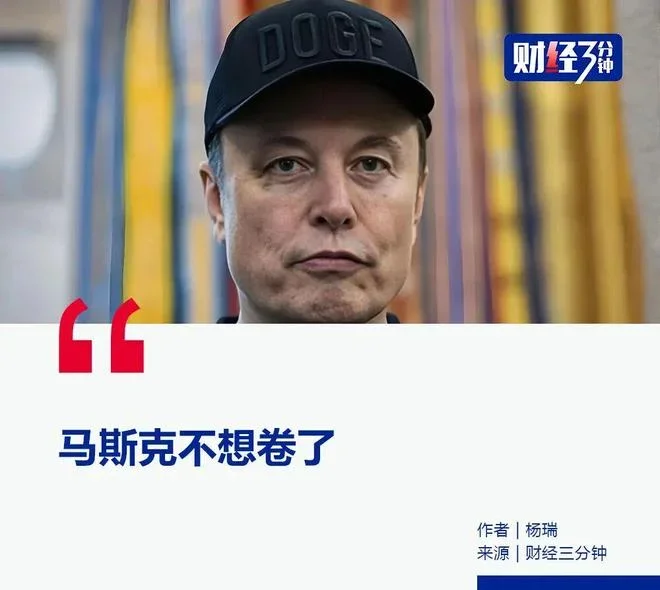


The production lines for the Model S and Model X were officially shut down on May 10, 2026.
The last vehicle rolled out of the Fremont factory. There was no grand farewell ceremony—just a brief, somber official update.
The phrase “14 years and 11 years” read like a eulogy for old comrades. An era of luxury electric vehicles has quietly been sealed away in the archives of history.
Many feel a sense of loss. These two models were once Tesla’s flagship, the icons that defined the brand. But in Elon Musk’s eyes, this is about cutting losses and moving on.
This is not a simple model upgrade, nor is it a discontinuation due to poor sales. It is a fundamental restructuring of Tesla’s core strategy.
Musk has never intended to turn Tesla into Toyota or BMW. Building cars is merely a means, not the end goal. His ultimate vision lies in artificial intelligence, robotics, and the distant dream of colonizing Mars. Cars are just stepping stones along the way.
What happens next at the Fremont factory is the real story.
The assembly lines will be dismantled within four months. The freed-up space will be entirely dedicated to producing Optimus humanoid robots. The target of 1 million units per year sounds like a fantasy, but that’s Musk’s style—go big or go home.
What about Tesla’s automotive business?
The Model 3 and Model Y will become the absolute主力 (mainstays). These volume models must hold the mass market. The Cybertruck will no longer be a pure pickup truck; it will be repurposed as an autonomous freight platform focused on commercial applications.
The always-delayed Roadster remains the sole model to sustain the brand’s high-end image.
This whole maneuver is essentially about simplification.
Cut unprofitable businesses. Cut models that are flashy but hold back progress. Pour all money and top technical talent into AI and robotics.
It’s a strategy of extreme focus—and an extreme gamble.
Why the urgency?
Because the ceiling for the electric vehicle industry is pressing down visibly. Global new energy penetration is rising, turning a blue ocean into a red ocean. Price wars are raging, and profit margins are razor-thin.
In such an environment, continuing to fight for luxury EVs is like wrestling in the mud.
Musk doesn’t want to compete in that game. He wants to shift the battlefield to the next dimension.
The humanoid robot sector is far more complex than cars. The technical challenges increase exponentially. How to mass-produce? How to control costs? How to make them affordable for ordinary businesses?
Every question is a deep pit. Tesla’s past experience in car manufacturing may not apply here. But that’s how the Silicon Valley iron man operates.
Looking back at his track record, SpaceX nearly went bankrupt three times, and Starlink was dismissed by many. He always dances on the edge of a cliff. If he wins, he becomes a history-altering disruptor. If he loses, it’s billions of dollars up in smoke.
This production halt also sends a warning to the entire automotive industry.
Traditional automakers are still agonizing over how to convert gasoline cars to EVs, or how to add a few more features to a spec sheet. Tesla is already thinking about transforming itself into an AI company. That’s the terrifying gap in mindset.
For domestic Chinese automakers that have been copying Tesla’s early model, this is not good news. You’re still learning how to make luxury EVs, and the other guy has already flipped the table to play with robots.
The rules of the game have suddenly changed, leaving followers in a difficult position.
Of course, this is also filled with enormous uncertainty.
Can Optimus be produced on schedule? Even if it is, is there enough market demand? Is the 1-million-unit target based on rigorous market research or just Musk’s whim? No one knows.
Workers at the Fremont factory face a major career shift. They used to build cars; now they may have to learn to build robots. That skill transition is challenging for many.
Tesla owners are also watching. With the flagship models gone, will the brand’s premium image suffer? Will maintenance and repairs be impacted? These are real concerns.
Musk is driving this transformation with almost brutal efficiency.
The outcome of this high-stakes bet will likely be known in two to three years. If Optimus becomes as successful as the Model 3, Tesla will shed its automaker label and become a true tech giant.
If it fails, the discontinuation of these classic models will be seen as the last party before the empire’s collapse.
Either way, the Tesla that relied on a few hit models is dead. What remains is a colder, more focused, and more dangerous AI warrior.