

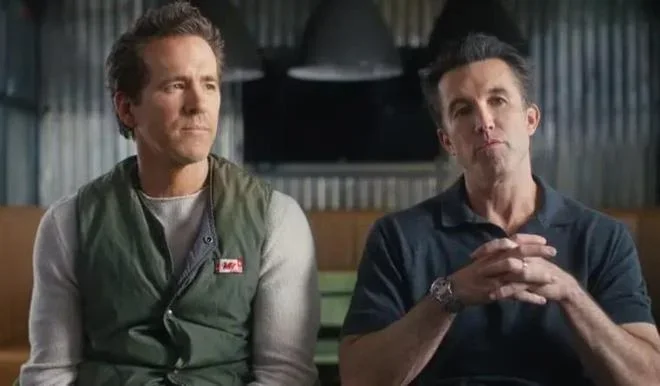
The Athletic reported on May 13 that while most discussions about Wrexham AFC this season have centered on their fluctuating form in the Championship, a more striking reality has emerged off the pitch. Despite having one of the lowest average attendances in the division, the club has achieved extraordinary commercial success thanks to the global reach of the documentary *Welcome to Wrexham*, with annual revenue reaching approximately $68 million (around £50 million).
If judged purely by on-field results, fans might recall Wrexham’s victories over Championship promotion contenders Coventry City and Ipswich Town, or their FA Cup penalty shootout triumph over Nottingham Forest, who later reached the Europa League semifinals. However, the true catalyst for the club’s transformation is not those match wins but the sustained impact of the documentary. FX recently confirmed a renewal for three more seasons, extending what was once seen as a lighthearted entertainment experiment.
*Welcome to Wrexham* has fundamentally altered the trajectory of both the North Wales city and its football club. As global audiences continue to follow the story via FX, Hulu, and Disney+, Wrexham has completed a rare ascent from non-league football to the Championship in a remarkably short span, a speed almost unprecedented in English football history. Concurrently, the club’s commercial structure has evolved dramatically. Although the club does not directly receive income from the documentary, the global exposure has attracted high-end sponsors, rapidly improving its financial standing. The latest accounts show revenue of about £33.35 million ($45 million) for the 2024–25 season, briefly making Wrexham the highest-earning club among those not receiving Premier League parachute payments, before being overtaken by Birmingham City.
Insiders estimate that this season’s revenue has grown further to between £46 million and £50 million ($63–$68 million), a remarkable feat given the club still boasts one of the lowest average attendances in the Championship.
In other words, Wrexham is defying traditional football economics: stadiums are not always full, yet revenue continues to surge. The core reason is the global traffic generated by the documentary, transforming the club from a local team into a global content brand. The journey began in 2020 when Rob McElhenney, inspired by watching *Sunderland ‘Til I Die*, contacted Ryan Reynolds via email about jointly acquiring a football club. FX subsequently signed a two-season filming contract, and what started as a seemingly entertainment-focused project has evolved into a global sports IP spanning five seasons with further expansions ahead.
As the fifth season aired, the threshold of English top-flight football loomed large. The opening episode featured longtime supporter and commentator Bryn Law declaring this may be one of the greatest stories in football history. Theoretically, if Wrexham were to gain promotion to the Premier League, it would become the most legendary narrative in sports.
Yet the documentary’s success is not solely due to the triumph narrative; it never shies away from emotional depth. The fifth season’s first episode, “The Heart of Wrexham,” tells the story of a young fan, Bailey Jones, who died of a brain hemorrhage at age 20 in 2023. His family donated his organs, saving multiple lives. A year later, the recipient of his heart, Matthew, contacted the family via letter, eventually leading to a meeting. This segment was handled with warmth and restraint, accompanied by the song “Just Like That,” giving the story cinematic emotional power and further emphasizing the deep connection between the football club and its community.
Simultaneously, the documentary portrays the genuine competitive challenges faced by the team. After promotion to the Championship, Wrexham struggled against experienced sides like West Bromwich Albion and Queens Park Rangers, hovering near the relegation zone. Match footage shows defensive disorganization, tempo mismatches, and fan disappointment. Manager Phil Parkinson faced immense pressure, while co-owner Ryan Reynolds summed up the harsh reality with a lighthearted “we got a good kicking.”
The series also captures the evolution and conflicts within fan culture. After a loss to QPR, some fans sarcastically asked, “Is this still a fairy tale?” Yet months later, the team staged a turnaround and re-entered the playoff places, turning skepticism into awe. This emotional volatility is a key reason for the documentary’s appeal.
Overall, *Welcome to Wrexham* season five maintains the series’ structural strength, seamlessly shifting between competitive sport and city narrative, while continuously reinforcing the owners’ self-deprecating involvement, making the story both authentic and entertaining. Most importantly, it shows how a team can find a new balance among modern commerce, media dissemination, and community sentiment.
With the series confirmed for at least a sixth, seventh, and eighth season, Wrexham’s story continues to unfold. This is not merely a promotion journey but a long-term experiment in blending football, urban identity, and global storytelling. Should the team eventually reach the Premier League, this narrative may become one of the most complete and cross-media influential legends in sports history.
